Ready to Plan
Your Safari?
Our Tanzania safari and adventure experts craft personalised, tailor-made itineraries — just for you.
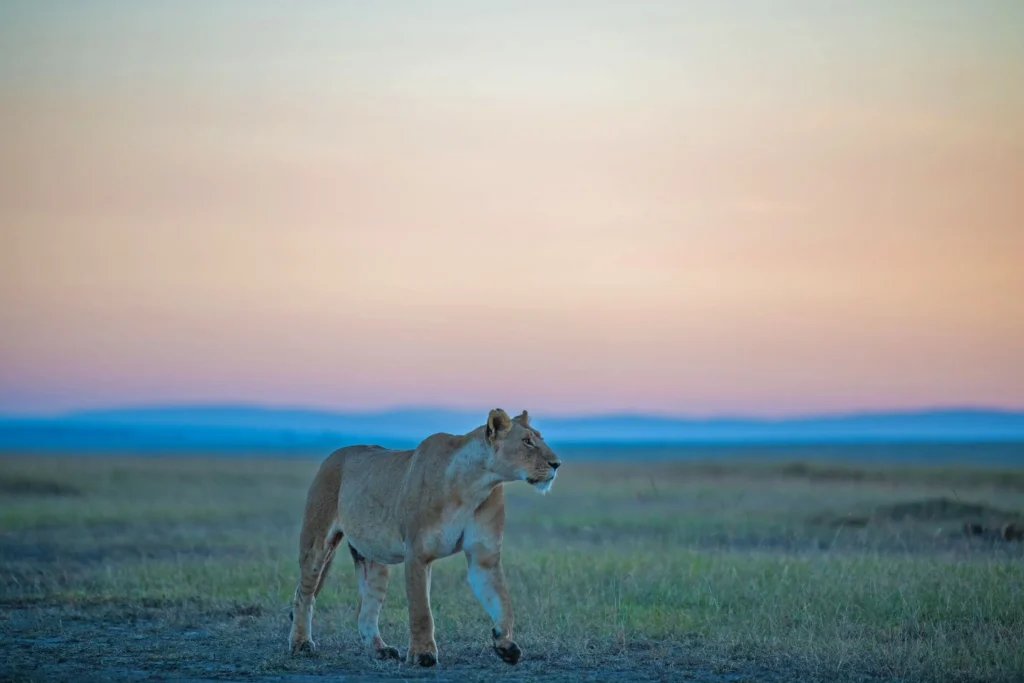
The Serengeti is not just a destination—it’s a system. A living, moving ecosystem that doesn’t care about your itinerary, your expectations, or your timing. And that’s exactly why most people get it wrong. At Tanzania Safari Experience, we’ve spent years guiding travelers across these plains, and one truth stands out: the Serengeti rewards those who understand it, not those who rush it.
If you approach this safari like a checklist—“see migration, take photos, leave”—you will miss the real story. This guide goes deeper, showing you how to actually experience the Serengeti the way it unfolds in reality.
The Serengeti lies in northern Tanzania, forming part of a vast ecosystem that stretches into Kenya’s Maasai Mara, known for its open plains, high wildlife density, and natural migration routes.
Serengeti National Park sits in the northern part of Tanzania, bordering the Ngorongoro Conservation Area to the southeast and extending northward into Kenya, where it becomes the Maasai Mara. But reducing it to geography alone is a mistake. The Serengeti is not defined by borders—it’s defined by movement. Wildlife here does not recognize national lines, fences, or human boundaries. It follows rain, grass, and instinct.
From Arusha, the safari gateway city, the Serengeti feels distant—and that distance is part of its magic. You are leaving behind structured environments and entering one of the last intact ecosystems on Earth. Covering nearly 15,000 square kilometers, the park is large enough that entire regions behave like separate ecosystems.
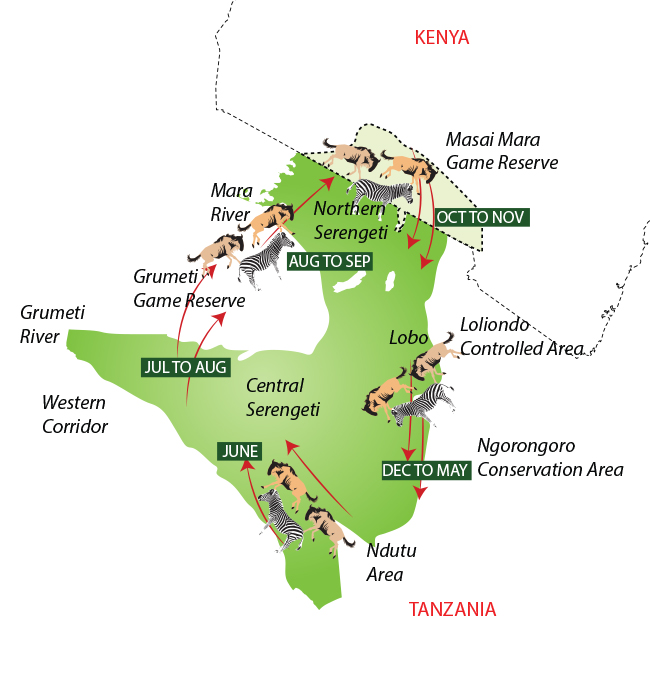
What most travelers underestimate: distance inside the Serengeti itself. You don’t “see the park” in a day. Even driving from Central Serengeti to the north can take hours. This is why poor itinerary planning kills the experience.
Serengeti is divided into Central, Northern, Southern, and Western regions, each offering different wildlife experiences depending on season, migration patterns, and landscape conditions.
Here’s where most safari plans fall apart—people treat the Serengeti as one place. It’s not. It’s a collection of regions, each with its own rhythm, wildlife density, and seasonal importance.
This is the heart of the Serengeti and where we place most first-time travelers for a reason. Wildlife here is consistent year-round because water sources don’t disappear like they do in other areas.
The Seronera Valley is a predator stronghold. Lions dominate the kopjes (rock outcrops), leopards rest in acacia trees, and cheetahs patrol the open plains. Unlike migration-focused areas, this region doesn’t rely on timing—it delivers daily.
Reality check: If your itinerary is weak or too short, Central Serengeti is your safety net.
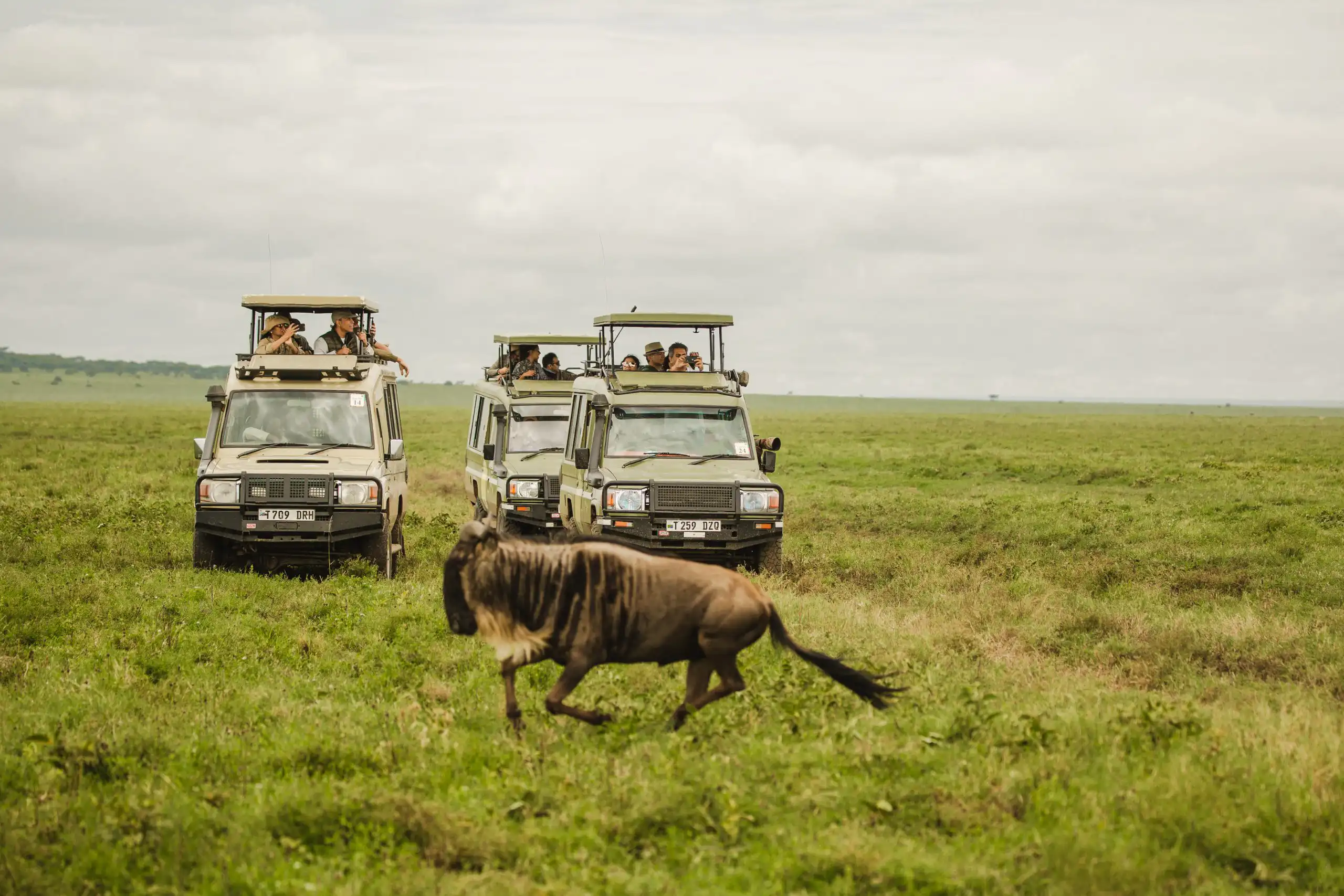
This is where the famous Mara River crossings happen. Thousands of wildebeest gather, hesitate, and then plunge into crocodile-infested waters.
But here’s the truth nobody tells you: crossings are unpredictable. You can wait hours—or days.
What makes this region special is not just the crossings, but the tension. You feel it in the air. Herds build up, predators wait, and when it happens, it’s chaos.
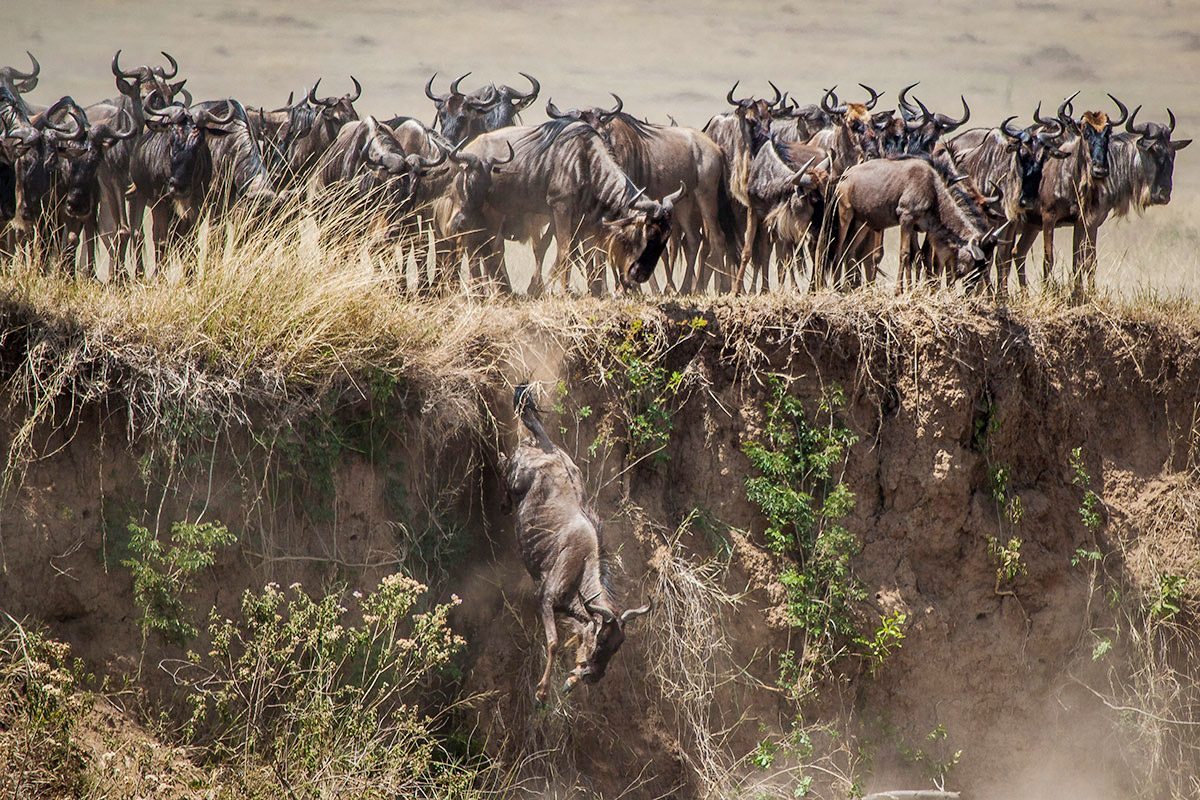
From January to March, the plains turn into a nursery. Hundreds of thousands of wildebeest calves are born within weeks.
This is not just beautiful—it’s brutal. Predators know exactly where to be. Lions, cheetahs, and hyenas take advantage of inexperienced calves.
Our honest take: This is one of the most underrated safari experiences. You don’t wait for action—it comes to you constantly.
Often ignored, this region comes alive between May and June as herds move toward the north. The Grumeti River crossings happen here, but they’re less crowded than Mara River crossings.
It’s quieter, rawer, and less commercialized.
The Great Migration is a continuous cycle where over 1.5 million wildebeest, accompanied by zebras and gazelles, move across the Serengeti ecosystem in search of fresh grazing and water.
Stop thinking of the migration as an “event.” It’s not a show scheduled for tourists—it’s survival in motion.
The herds follow rainfall patterns. When grass is depleted, they move. When water disappears, they move. This cycle never stops.
But here’s the critical insight: migration is not always dramatic. Sometimes it’s slow, quiet movement. Sometimes it’s explosive river crossings.
If your expectation is constant chaos, you’ll be disappointed. If you understand the rhythm, you’ll be amazed.
Serengeti hosts one of the highest concentrations of wildlife in Africa, including lions, leopards, cheetahs, elephants, buffalo, and over 500 bird species.
The Serengeti is not just about numbers—it’s about interaction.
You are not just spotting animals—you are watching behavior. Hunts, territorial fights, mating rituals—it’s all here.
What most people miss: wildlife behavior depends heavily on your guide. Knowing where animals were yesterday changes what you see today.
Serengeti offers year-round attractions including kopjes, predator zones, hippo pools, birdlife, and scenic landscapes beyond the migration itself.
If you only focus on migration, you are missing 70% of what makes Serengeti special.
Expert insight: Some of the best safari moments happen when nothing “big” is happening—just watching how animals exist in this ecosystem.
Serengeti safari costs typically range from $250 to $1,500+ per person per day depending on accommodation level, season, group size, and whether you choose a private or fly-in safari experience.
Let’s cut through the nonsense—Serengeti pricing is all over the place, and most travelers don’t understand why. You’ll see cheap numbers online, then get shocked when real quotes come in higher. That’s not random. It’s because safari pricing is driven by multiple moving parts, not just “a package price.”
If you don’t understand what you’re paying for, you will either overpay—or worse, underpay and end up with a weak experience.
| Safari Type | Price Range | What You Actually Get |
|---|---|---|
| Budget Camping | $250 – $400 | Basic camping, shared facilities, simple meals |
| Mid-Range Safari | $400 – $700 | Tented camps/lodges, private guide, full board |
| Luxury Safari | $700 – $1,200 | High-end lodges, premium service, best locations |
| Ultra-Luxury | $1,200 – $1,500+ | Exclusive lodges, fly-in access, top-tier comfort |
Important: These are real-world averages—not unrealistic “from $150” marketing traps.
The total cost depends on accommodation level, number of travelers, season, transport method, and how well your itinerary is designed.
Most people think price is about luxury vs budget. That’s only part of the story.
Where you sleep matters more than anything.
Hard truth: A cheaper lodge in the wrong location can ruin your safari.
Safari costs are shared—especially the vehicle and guide.
That same safari can vary by hundreds of dollars depending on group size.
What people miss: Lower prices often mean fewer crowds and better photography conditions.
We’ve seen travelers waste 1–2 full days driving when they could have been watching wildlife.
Serengeti has fixed government fees:
These are included in most safari quotes but make up a big portion of the total cost.
Private safaris cost more but offer flexibility, privacy, and a better overall experience, while shared safaris reduce cost but limit control and comfort.
Brutal truth: If you’re doing a honeymoon or once-in-a-lifetime trip, shared safari is a weak choice. You’re compromising experience to save money.
Additional costs can include tips, flights, balloon safaris, and optional activities that are often not included in the base price.
Here’s where people get caught off guard:
Always ask what’s included—don’t assume.
The key is not finding the cheapest safari—it’s finding the right value based on timing, location, and guide expertise.
Reality check: Cheap safaris cut corners—either on location, guide quality, or logistics.
Our Expert Recommendation
As your safari experts at Tanzania Safari Experience, we recommend focusing on itinerary design and location rather than just price—this is what determines the real value of your safari.
A well-designed mid-range safari often beats a poorly planned luxury one.
We focus on:
- Positioning you where wildlife actually is
- Matching your travel dates with migration movement
- Giving you experienced guides who know the terrain
That’s how you get value—not just a cheaper invoice.
If you approach this like buying a product, you’ll get average results. A Serengeti safari is not something you “buy cheap”—it’s something you plan properly.
The difference between a $2,500 safari that blows your mind and a $5,000 safari that disappoints often comes down to one thing: execution.
And that’s exactly where most people get it wrong.
Activities include game drives, hot air balloon safaris, cultural visits, and limited walking safaris, each offering a different perspective of the park.
This is the core experience. Morning and late afternoon drives give the best results.
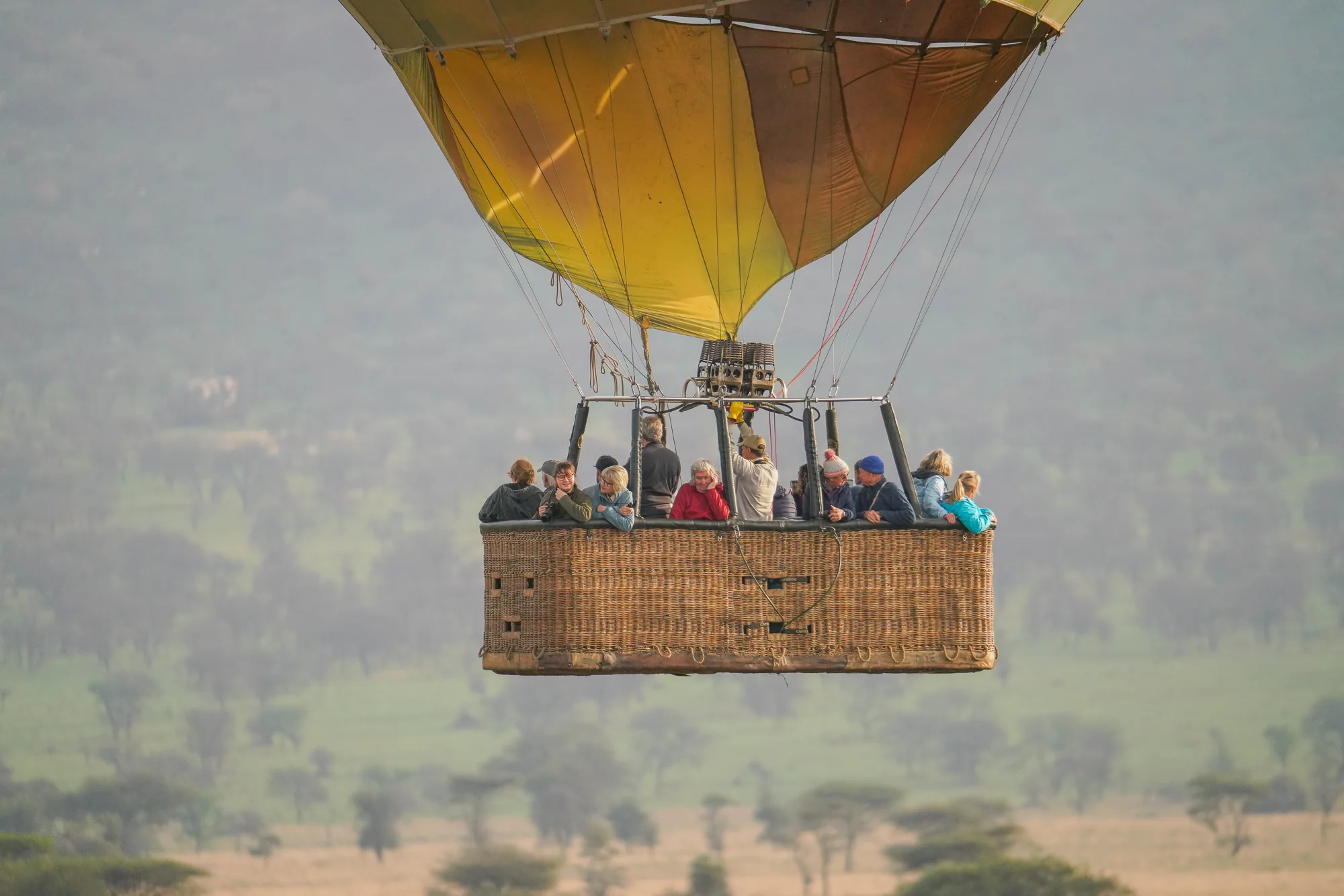
Floating above the plains at sunrise gives a completely different perspective. You see patterns—animal trails, herd formations—that you miss on the ground.
Visiting Maasai communities adds context to the land. It’s not just wildlife—it’s human coexistence.
You can reach Serengeti by road or by domestic flights, with fly-in safaris offering faster access and significantly more time for wildlife viewing.
Driving takes 6–8 hours from Arusha. It’s long, dusty, and eats into your safari time.
Flying, on the other hand, changes everything. You land inside the park—Seronera, Kogatende, or Ndutu—and start your safari immediately.
Our position: If you can afford it, fly. You gain time, comfort, and energy.
Serengeti has a tropical savannah climate with warm days, cooler nights, and distinct dry and wet seasons influencing wildlife movement.
Temperatures are stable, but conditions change.
Rain doesn’t ruin safaris—it often improves them.
Serengeti is a year-round destination, with each season offering different advantages depending on wildlife behavior and travel preferences.
The best time is not about weather—it’s about priorities.
Do you want drama, volume, solitude, or photography conditions?
Your answer determines your timing.
Pack neutral clothing, layered outfits, sun protection, insect repellent, binoculars, and camera gear suited for dusty conditions.
Packing wrong can ruin comfort.
Pro Tip: Dust is constant. Protect your electronics.
Accommodation ranges from budget camps to luxury lodges, with location being more important than comfort level for wildlife access.
| Type | Experience | Reality |
|---|---|---|
| Camping | Raw, immersive | Not for everyone |
| Mid-range camps | Balanced comfort | Best value |
| Luxury lodges | Premium | Location still matters |
Hard truth: Bad location = bad safari, no matter how expensive the lodge is.
Travel Tips from Our Experts
Planning your Serengeti safari correctly—based on timing, region, and guide expertise—determines whether your experience is average or exceptional.
- Match your itinerary with migration movement
- Don’t overpack destinations
- Prioritize guide quality
- Allow enough days
Minimum 3 days, but 4–5 days is ideal to properly explore different regions, track wildlife movement, and avoid rushing between long distances inside the park.
Three days is the bare minimum—and honestly, it’s tight. You’ll see wildlife, yes, but you won’t understand the Serengeti. Distances inside the park are massive, and wildlife doesn’t wait for you.
With 4–5 days, everything changes:
Hard truth: Most people who book 2–3 days leave saying, “It was good.”
People who stay 4–5 days say, “I need to come back.”
If you want to follow the migration properly or experience different landscapes, anything under 4 days is limiting yourself.
Yes—Serengeti offers exceptional wildlife viewing year-round, with high predator density, resident animals, and consistent game drives even when migration is elsewhere.
If your entire decision depends on migration, you’re thinking too narrowly.
The Serengeti is not empty when the migration moves—it’s still one of the richest wildlife ecosystems in Africa. Lions, leopards, cheetahs, elephants, and massive herbivore populations remain year-round.
In fact, many experienced travelers prefer non-migration periods because:
Reality check: Migration is a bonus, not the only reason to visit.
Some of the best lion hunts we’ve witnessed had nothing to do with migration at all.
Yes—Serengeti is very safe when you travel with a professional guide, follow park rules, and stay within designated safari areas and accommodations.
Safety concerns usually come from misunderstanding how safaris work.
You are not walking around alone. You are:
Wildlife is respected, not approached recklessly.
What actually keeps you safe:
What’s more dangerous than wildlife?
Bad decision-making—like ignoring your guide or choosing inexperienced operators.
With the right setup, Serengeti is one of the safest safari destinations in Africa.
Yes—you can see lions, elephants, buffalo, and leopards regularly, but rhinos are rare and more reliably spotted in Ngorongoro Crater.
Let’s be clear: Serengeti delivers 4 out of the Big Five consistently.
The challenge is rhinos. They exist in the Serengeti, but sightings are rare due to low population and protection zones.
Smart strategy:
Combine Serengeti with Ngorongoro Crater, where rhino sightings are much more reliable.
Brutal truth: If your goal is to tick off the Big Five, relying only on Serengeti is a weak plan. Combine destinations and do it properly.
Serengeti is larger, less crowded, and offers a more diverse and authentic wilderness experience, while Maasai Mara provides more compact wildlife viewing and easier access.
This is the classic comparison—but most answers are too simplistic.
Here’s the honest breakdown:
Our perspective from the field:
Serengeti feels like nature. Maasai Mara feels like a highlight reel.
If you want depth, space, and authenticity—the Serengeti is on another level.
Most people don’t ruin their Serengeti safari because of bad luck—they ruin it because of bad planning.
The difference between an average trip and a mind-blowing one comes down to timing, positioning, and execution.
At Tanzania Safari Experience, we don’t guess—we place you exactly where the action is happening. That’s the difference between seeing wildlife… and actually experiencing the Serengeti.